How Mobile Gaming Revolutionized the Casual Gaming Industry
Casual gaming has always been about one thing: fun without friction. But for most of its early history, that promise came with a catch — you needed a computer, a decent internet connection, and at least some patience for installation screens. Then the smartphone arrived, and everything changed. The transformation was so complete that today's casual gaming landscape would be almost unrecognizable to someone who played browser games in 2005.
The State of Casual Gaming Before Mobile
Before smartphones, casual gaming lived on desktop PCs and early web browsers — functional, but limited in reach. Games like Solitaire, Minesweeper, and Flash-based browser titles were genuinely popular, but they required players to sit down at a desk. That physical constraint kept casual gaming a secondary activity rather than a lifestyle habit.
Portals like Miniclip and Addicting Games attracted millions of visitors in the early 2000s, proving that appetite for simple, accessible games was massive. But distribution was clunky. Players had to remember URLs, wait for Flash to load, and navigate cluttered websites. The games were fun — the experience around them often wasn't.
Console gaming existed in parallel, but it skewed toward dedicated players willing to invest in hardware and learn complex controls. Casual players were largely an afterthought in that world. The audience was there; the right delivery mechanism wasn't.
The Smartphone Spark: When Everything Changed
The mass adoption of smartphones — particularly after Apple launched the App Store in 2008 and Google Play followed shortly after — created an instant global distribution channel that casual gaming had never had before. Suddenly, a game could reach millions of players in days, with no physical shelf space required and no installation disc in sight.
The significance of app stores is hard to overstate. They solved the discovery and distribution problem in one move. A player waiting for a train could search "word puzzle," find a game with strong reviews, download it in under a minute, and be playing before the train arrived. That frictionless path from curiosity to gameplay was genuinely new.
Smartphones also meant the device was already in people's pockets. There was no separate purchase decision for hardware — hundreds of millions of people already owned a capable gaming device without thinking of it that way. Casual gaming hitched a ride on one of the fastest technology adoption curves in history.
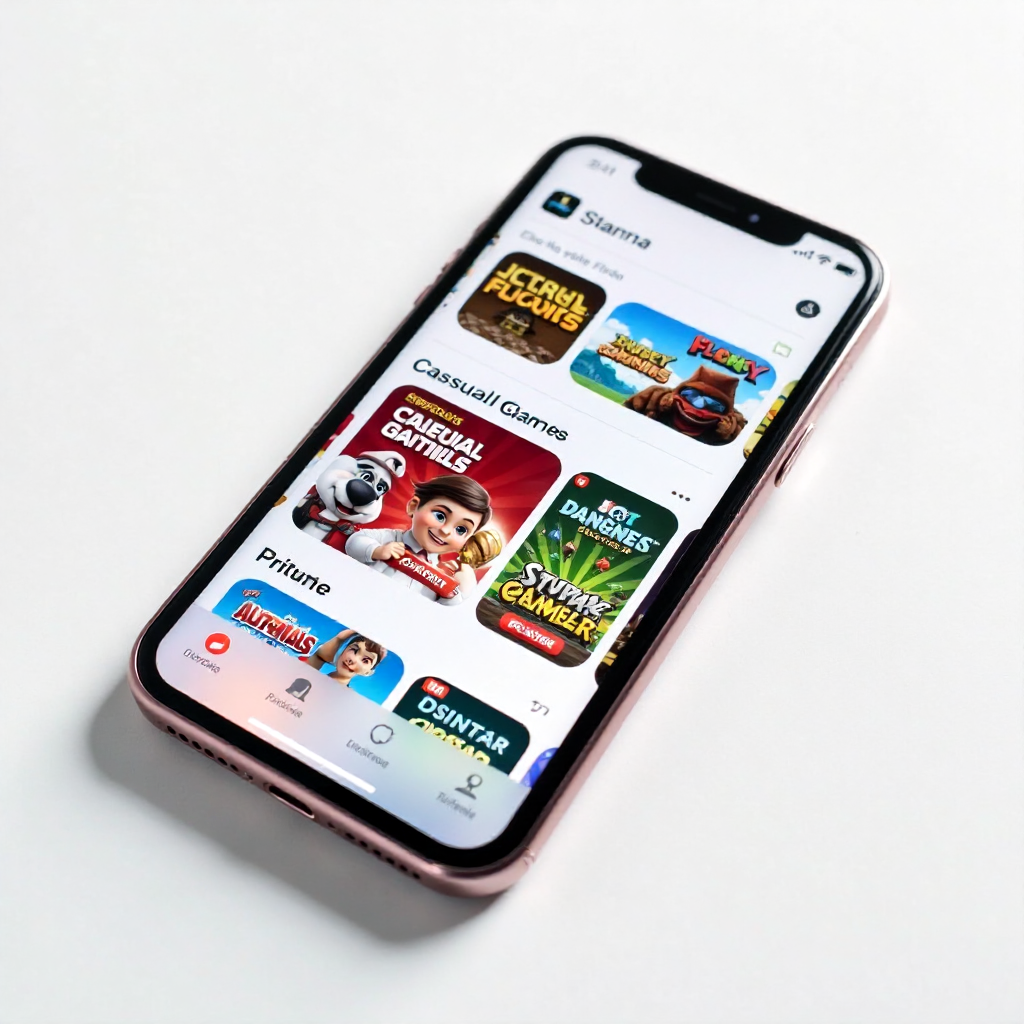
Touchscreen Controls and Bite-Sized Gameplay
Touchscreen interfaces made casual games feel natural in a way that keyboards and mice never quite managed for non-gamers. Swiping, tapping, and pinching are gestures people already used throughout their day — applying them to gameplay required almost no learning curve.
This matters more than it might seem. One of the persistent barriers to gaming had always been controller complexity. Casual players didn't want to memorize button combinations or manage multiple input layers. A game you could play with one thumb while holding a coffee cup? That was something genuinely different.
Session-based gameplay evolved alongside these controls. Mobile games adapted to real-world rhythms — a three-minute commute, a ten-minute lunch break, five minutes in a waiting room. Levels got shorter. Progress systems were designed around frequent, brief check-ins rather than long uninterrupted sessions. The games met players where they actually were, rather than demanding dedicated blocks of time.
New Players, New Audience: Expanding Beyond the Core Gamer
Mobile gaming fundamentally expanded who plays games. Demographics that traditional gaming largely ignored — women over 35, older adults, people who commuted by public transit, parents with ten spare minutes — found themselves drawn into casual mobile titles in enormous numbers.
Research from multiple industry sources has consistently shown that the mobile gaming audience skews older and more female than console gaming. This isn't a niche observation; it reflects a genuine demographic shift. Games like Candy Crush Saga and Words With Friends became cultural phenomena precisely because they appealed to people who had never thought of themselves as gamers.
The social dimension helped. Mobile casual games integrated with contacts and social networks, letting people play against friends or family without anyone needing to be in the same room. That transformed gaming from a solitary or couch-based activity into something woven through everyday social life. A grandmother playing Scrabble-style games with her grandchildren across three time zones is a genuinely new kind of gaming experience that mobile made possible.
The Freemium Revolution: Changing How Casual Games Make Money
The shift from one-time purchases to the freemium model — free to download, with optional in-app purchases — is arguably the most consequential business change mobile brought to casual gaming. It lowered the barrier to entry to zero, which dramatically expanded the potential player base.
Before mobile, casual games typically sold for a fixed price, whether as a boxed product or a digital download. That price, even a modest one, filtered out players who were uncertain or uncommitted. Free-to-play removed that filter entirely. Players could try a game with no financial risk, and the ones who got hooked could choose to spend on cosmetics, extra lives, or progression boosts.
The model has real tensions built into it — some games lean too heavily on spending pressure, which frustrates players. But when executed well, it creates a sustainable ecosystem where a small percentage of paying players fund an experience that millions enjoy for free. For casual gaming specifically, where players are often browsing rather than committed, this alignment of incentives turned out to be remarkably effective. In-app purchases became the engine that funded an explosion of new casual titles across the mobile gaming ecosystem.
Hyper-Casual Games: Mobile's Most Disruptive Sub-Genre
Hyper-casual games — titles with near-zero learning curves, minimal narrative, and gameplay loops measurable in seconds — represent the purest expression of what mobile casual gaming became. These are games anyone can understand within moments of picking them up, designed to be played in the shortest possible session and picked up again just as easily.
The format sounds almost too simple to be compelling, but the numbers tell a different story. Hyper-casual titles regularly dominate app store charts, sometimes accumulating tens of millions of downloads within weeks of launch. Their appeal cuts across age groups and gaming experience levels in a way few other formats can match.
What makes hyper-casual games work is a kind of elegant reduction. Developers strip away everything non-essential — story, complex controls, lengthy tutorials — and focus entirely on a single satisfying mechanic. Stack blocks. Slice shapes. Guide a ball through obstacles. The simplicity is the point, not a limitation. These games also benefit from low production costs, which means developers can release more titles and iterate quickly based on what resonates.

What Mobile's Revolution Means for Casual Gaming Today
Casual gaming is now one of the dominant entertainment categories on the planet, and mobile innovation is the primary reason why. The habits, business models, and design philosophies that mobile introduced have become the baseline — not just for mobile games, but for how casual gaming thinks about itself across all platforms.
Push notifications, daily rewards, streak mechanics, and social leaderboards — all of these engagement mechanics were refined on mobile and have since spread to browser games, social platforms, and even some console titles. The fingerprints of mobile casual gaming are everywhere in modern entertainment design.
For players, the lasting gift is access. The games you love — whether it's a word puzzle you play every morning or a match-three game you return to between meetings — exist in their current form because mobile made casual gaming something anyone could pick up, enjoy, and return to on their own terms. That's a genuinely significant shift in how people relate to games, and it happened remarkably fast.
The casual gaming industry didn't just grow because of mobile. It was remade by it.
Frequently Asked Questions
What is the difference between casual gaming and hardcore gaming?
Casual gaming refers to games designed for short sessions, simple controls, and broad accessibility — no prior gaming experience required. Hardcore gaming typically involves complex mechanics, longer time commitments, and a steeper learning curve aimed at dedicated players. The distinction is about design intent and audience, not the quality of the game.
Why did casual games become so popular on mobile devices?
Mobile devices removed the main barriers to casual gaming: dedicated hardware, installation requirements, and long session commitments. Touchscreen controls felt intuitive, app stores made discovery easy, and games were designed to fit into spare minutes throughout the day. The combination made casual gaming genuinely accessible to people who had never played games before.
What are hyper-casual games and why are they successful?
Hyper-casual games are mobile titles built around a single, instantly understandable mechanic — think tapping, swiping, or stacking — with no tutorial needed. They succeed because they eliminate every barrier between a player and the fun part. Anyone can play immediately, sessions can last thirty seconds or thirty minutes, and the simplicity makes them easy to return to repeatedly.
How do free-to-play casual games make money?
Free-to-play games generate revenue primarily through in-app purchases — optional spending on extra lives, cosmetic items, power-ups, or faster progression. Some also include advertising, where players watch short ads in exchange for in-game rewards. The model works because a relatively small percentage of engaged players choosing to spend can fund an experience that millions enjoy without paying anything.
Is mobile still the biggest platform for casual gaming?
Yes. Mobile remains the dominant platform for casual gaming by a significant margin, measured by both player numbers and revenue. The combination of device ubiquity, app store infrastructure, and design formats refined specifically for touchscreens has kept mobile at the center of casual gaming — even as browser and social platform games continue to exist alongside it.