The Evolution of Casual Games: From Solitaire to Modern Match-3
Somewhere between a coffee break and a commute, millions of people pick up their phones and start matching colored gems, solving puzzles, or flipping cards. They probably don't think of themselves as "gamers." But they are — and they've been playing casual games longer than most people realize.
What Makes a Game "Casual"?
A casual game is defined by three core traits: simple rules that take minutes to learn, sessions short enough to fit into everyday life, and an audience that extends well beyond traditional gaming demographics. You don't need a manual, a controller, or hours of free time. You just need a few minutes and a willingness to play.
This game accessibility is the engine behind casual gaming's reach. A retired teacher, a teenager on a bus, and a software developer on lunch break can all enjoy the same puzzle game — and often do. That cross-generational, cross-demographic appeal is what separates casual titles from their more demanding counterparts.
Casual games also tend to rely on engagement loops — small reward cycles that keep players coming back. Completing a level, earning a star, maintaining a daily streak: these mechanics trigger a sense of progress that feels genuinely satisfying, even in short bursts. The simplicity on the surface hides surprisingly sophisticated design underneath.
The Desktop Era: Solitaire, Minesweeper, and the Birth of Casual Play
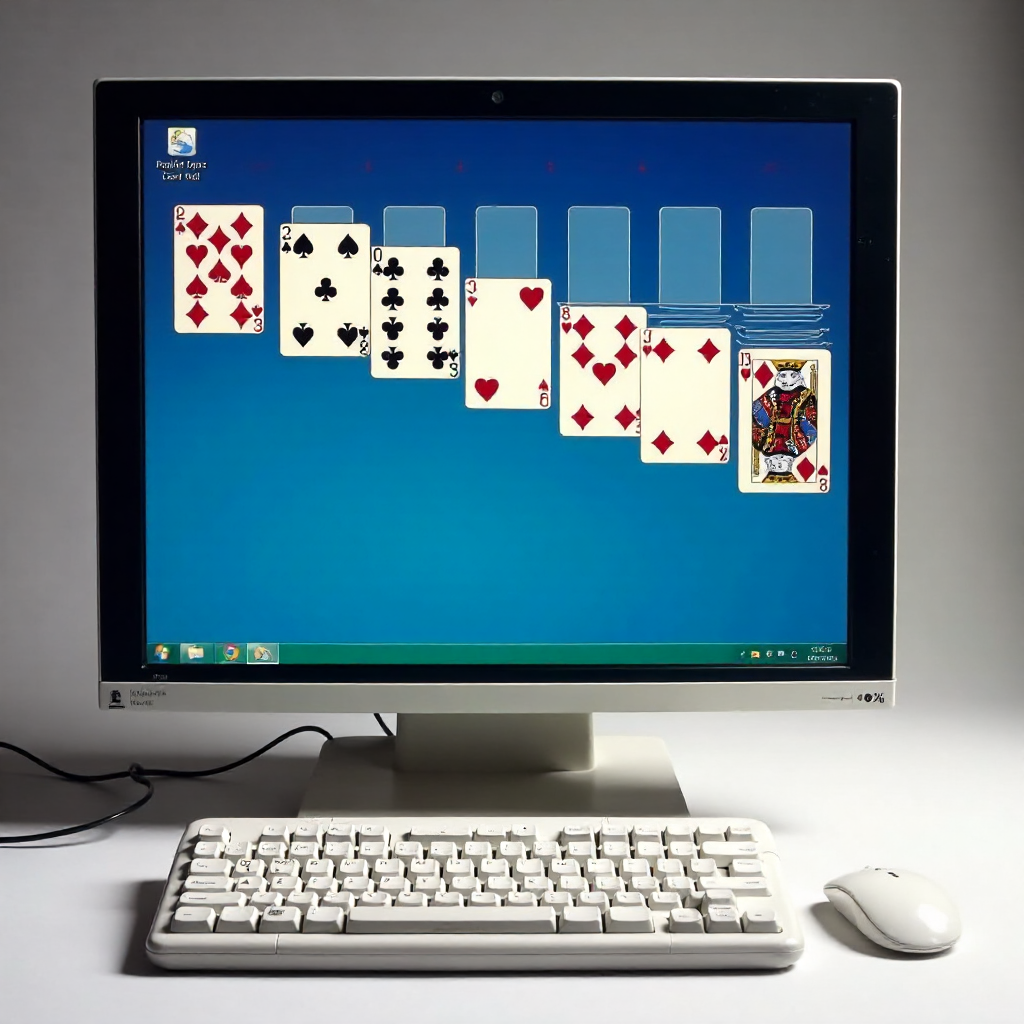
The casual gaming story begins not in an arcade, but on a desktop PC. When Microsoft bundled Solitaire with Windows 3.0 in 1990, the goal wasn't entertainment — it was teaching users how to use a mouse. Drag, drop, click. But something unexpected happened: people kept playing long after they'd mastered the mouse.
Solitaire became the most-played computer game in history for a reason. It asked nothing of the player except a few minutes and a willingness to try again. No storyline to follow, no reflexes required. Just cards, logic, and a quiet kind of satisfaction when the deck cleared.
Minesweeper arrived alongside it, offering a different flavor of the same idea — short, logic-based sessions with a clean win/lose structure. Together, these two titles introduced an entire generation of office workers, students, and home users to digital play. Many of them had never touched a video game before.
This era established the template: pre-installed, zero-cost, instantly understandable. The casual game genre was born from practical necessity and became a cultural habit.
The Browser and Flash Game Revolution
By the late 1990s, casual gaming had outgrown the desktop and found a new home in the browser. Flash games — small, web-based titles that ran directly in a browser window — transformed who could make games and who could play them.
Suddenly, independent developers could publish a game overnight and reach anyone with an internet connection. Portals like Miniclip, Newgrounds, and Kongregate became the YouTube of gaming: chaotic, creative, and completely free. Players didn't download anything. They just clicked and played.
The sheer variety expanded what "casual" could mean. Word games, physics puzzles, tower defense titles, simple platformers — Flash games covered enormous ground. They also proved something important: people would happily play games in a browser during a lunch break, between tasks, or while waiting for something to load. The puzzle games category especially thrived here, laying groundwork for what would come next.
Flash had real limitations — it wasn't mobile-friendly, and it required a plugin that browsers eventually abandoned. But as a bridge between the desktop era and the smartphone age, it was irreplaceable. It democratized game creation and expanded the casual audience by orders of magnitude.
The Rise of Match-3: A Format That Changed Everything
Match-3 mechanics — swapping adjacent tiles to create groups of three or more identical items — became the defining format of modern casual gaming because they hit a rare sweet spot: instantly learnable, endlessly varied, and deeply satisfying to play.
The format has roots going back to puzzle games like Shariki (1994) and Bejeweled (2001), which popularized the gem-swapping structure on PC. What made match-3 so durable wasn't novelty — it was reliability. Every session delivers the same fundamental pleasure: spot the pattern, make the move, watch the cascade. The brain gets a small, clean reward each time.
When developers started layering engagement loops on top of this core mechanic — level progression, star ratings, daily challenges, limited lives — the format became genuinely hard to put down. Completing a difficult level after several attempts produces a disproportionate sense of achievement relative to the effort involved. That's not an accident; it's design.
The match-3 format also scales beautifully. A beginner and an experienced player can enjoy the same game at different levels of intensity. That scalability, combined with near-zero learning curve, made it a natural fit for the platform that would carry casual gaming to its widest audience yet.
Mobile Gaming: Putting Casual Games in Every Pocket
Smartphones didn't just change how people played casual games — they changed who played them and when. With the launch of Apple's App Store in 2008 and Google Play shortly after, casual games reached a global audience that dwarfed anything the desktop or browser era had managed.
Mobile gaming removed the last remaining barrier: you no longer needed to be at a desk. Games were available on the bus, in a waiting room, during a commercial break. The match-3 format was perfectly suited to this context — a level takes two to five minutes, touch controls feel natural for swapping tiles, and the visual feedback works beautifully on a small screen.
The free-to-play model, enabled by in-app purchases, also changed the economics of casual gaming. Players could download and enjoy a game without spending anything, lowering the entry threshold to zero. This accelerated adoption dramatically, particularly among audiences who had never paid for a game before.
The result was a casual gaming boom unlike anything the industry had seen. Titles built around match-3 mechanics reached hundreds of millions of players across every continent — not because of aggressive marketing alone, but because the format genuinely worked on mobile in a way that felt native to the platform.
Modern Casual Gaming: Trends, Hyper-Casual, and What's Next
Today's casual gaming landscape has split into distinct layers. At one end sit polished match-3 titles with hundreds of levels, narrative elements, and social features. At the other end, hyper-casual games have emerged as the genre's most stripped-down form.
Hyper-casual titles reduce gameplay to a single mechanic — tap to jump, swipe to slice, tilt to steer — and generate revenue almost entirely through advertising rather than in-app purchases. They're designed to be downloaded, played for a few sessions, and replaced. The barrier to entry is essentially zero, and so is the commitment required.
Between these poles, developers are experimenting with social layers: cooperative challenges, friend leaderboards, live events tied to real-world calendars. Daily streaks and seasonal content have become standard tools for retention, borrowing techniques from social media to keep players returning habitually.
Looking ahead, casual gaming is likely to absorb elements from adjacent spaces — light narrative experiences, gentle creativity tools, and community-driven content. The core appeal won't change. But the formats surrounding it will keep evolving, as they always have.
Why Casual Games Continue to Dominate Entertainment
Casual games endure because they serve a genuine human need: accessible, low-stakes entertainment that fits into real life rather than demanding time away from it. They're not a lesser form of gaming — they're a different one, optimized for different circumstances.
The audience has always been broader than the gaming industry initially recognized. When Solitaire shipped with Windows, Microsoft wasn't thinking about entertainment. But the people who played it — office workers, parents, retirees — were telling the industry something it took decades to fully hear: games don't have to be hard, long, or expensive to be worth playing.
Stress relief, mental engagement, a moment of quiet focus in a noisy day — these are the real reasons people reach for a puzzle game. The match-3 format delivers all of that in two minutes. That's not a small thing. It's precisely why the format has lasted, and why casual gaming as a whole shows no signs of slowing down.
From a mouse-training tool bundled with Windows to a genre that spans billions of devices worldwide, the journey of casual games reflects something larger: the gradual recognition that play is a fundamental part of human life, not a luxury reserved for dedicated enthusiasts.
Frequently Asked Questions
What was the first casual video game ever made?
Pinning down a single "first" is tricky, but many historians point to early arcade titles like Pong (1972) as proto-casual games — simple, immediate, and accessible. In the PC context, Microsoft Solitaire (1990) is widely recognized as the game that introduced casual play to mainstream audiences on a massive scale.
Why are match-3 games so addictive?
Match-3 games tap into pattern recognition, a cognitive process the brain finds inherently rewarding. Combine that with clear visual feedback, short win cycles, and progressive difficulty, and you get a format that delivers consistent small rewards — enough to feel satisfying without requiring deep commitment. The variable reward structure common in these games also plays a role in keeping players engaged across sessions.
What is the difference between casual and hyper-casual games?
Casual games typically offer structured progression — levels, goals, narrative elements — and expect players to return over days or weeks. Hyper-casual games are even simpler: one mechanic, near-instant play, and minimal progression. They're designed for very short sessions and are almost always free, monetized through ads rather than in-app purchases.
Are casual games considered "real" games by the gaming community?
The debate has largely faded. While some hardcore gaming communities once dismissed casual titles, the scale of casual gaming's audience — and the genuine design sophistication behind successful titles — has earned widespread recognition. Games don't need to be complex to be well-crafted or genuinely enjoyable.
What platforms are casual games most popular on today?
Mobile devices — smartphones and tablets — are by far the dominant platform for casual gaming today. Web browsers remain relevant, particularly for puzzle and card games. Dedicated gaming consoles have also embraced casual titles, especially through downloadable storefronts, though mobile remains the primary home for the genre.