The Psychology Behind Casual Gaming Addiction: Why Can't We Stop?
You open a puzzle game to kill five minutes. Forty-five minutes later, you're still playing. Sound familiar? You're not alone — and you're not weak-willed. The reason casual games are so hard to put down has everything to do with how the human brain is wired, and how clever game designers have learned to work with that wiring.
What Makes Casual Games Different From "Serious" Gaming
Casual games — mobile titles, browser-based puzzles, and hypercasual games — are uniquely sticky precisely because of their simplicity. Unlike traditional gaming, which often demands time investment, skill mastery, and narrative commitment, casual games lower the barrier to entry as far as it will go.
Pick up and play in seconds. No tutorial required. No story to follow. That frictionless entry is a feature, not an oversight. When starting a session costs nothing cognitively, the decision to play becomes almost automatic — and that's where the psychology gets interesting.
Hypercasual games in particular are engineered around a single core mechanic repeated with slight variations. The simplicity isn't laziness; it's precision. The fewer decisions a player has to make, the more mental bandwidth goes toward the reward cycle itself.
The Dopamine Loop — Your Brain on "Just One More Level"
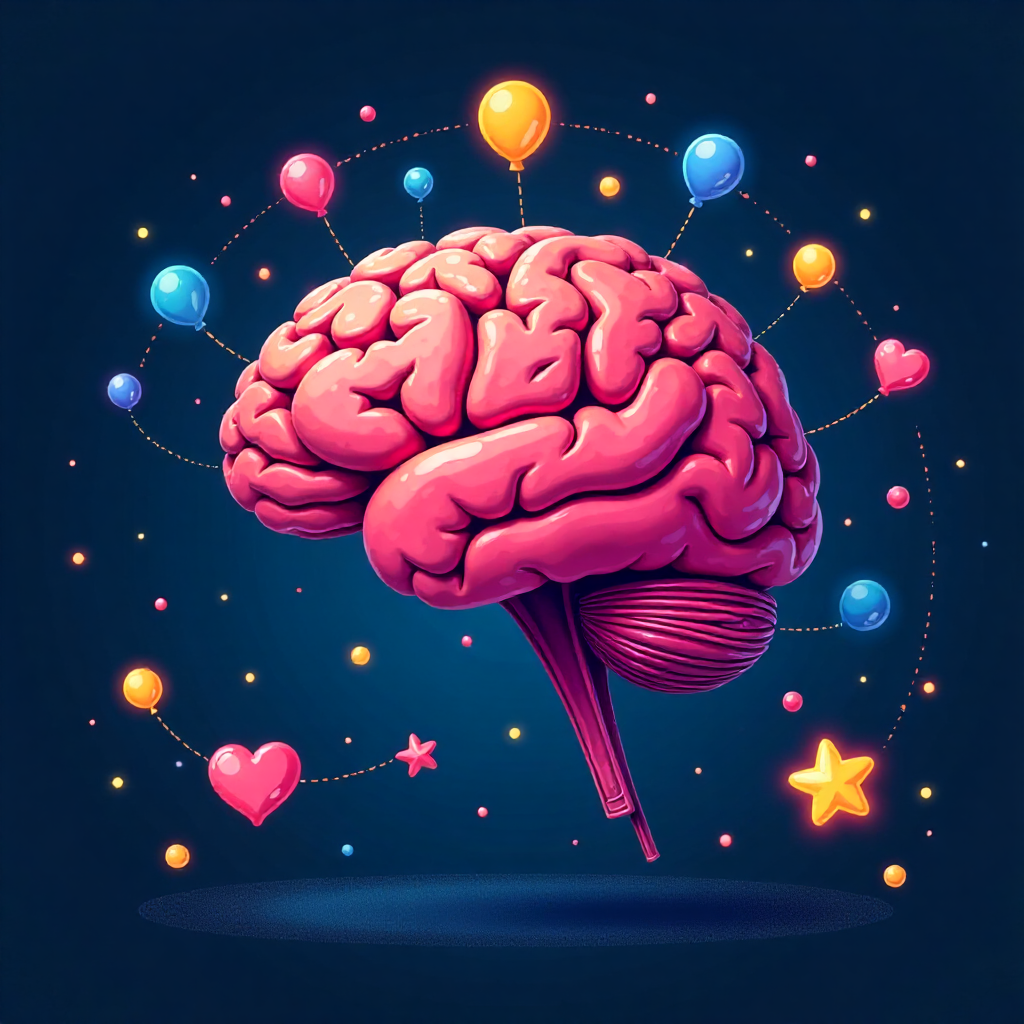
The dopamine loop is the neurochemical engine driving compulsive play. Every time you complete a level, clear a board, or hit a high score, your brain releases a small burst of dopamine — the same neurotransmitter involved in pleasure, motivation, and learning.
Here's the key detail most people miss: dopamine isn't just released when you win. It spikes in anticipation of a potential reward. That moment just before the result — will this move clear the board? — is neurologically almost as powerful as the win itself.
This creates a self-reinforcing cycle. Win, feel good, want to feel good again, play again. The loop is fast in casual games. Levels are short. Feedback is immediate. The brain barely has time to return to baseline before the next reward opportunity arrives. That rhythm is what makes "just one more level" feel so reasonable, every single time.
Variable Rewards and the Slot Machine Effect
Unpredictable rewards are more compelling than predictable ones — this is one of behavioral psychology's most robust findings, and game designers know it well. The variable reward schedule, first described by psychologist B.F. Skinner, is the same principle that keeps people pulling slot machine levers.
In casual games, this shows up as mystery chests, random power-up drops, loot boxes, and spin-the-wheel bonuses. You don't know exactly what you'll get or when. That uncertainty doesn't reduce engagement — it dramatically increases it.
The reason is counterintuitive: when rewards are guaranteed, the brain stops paying close attention. When they might arrive at any moment, attention stays elevated. The compulsion loop — the core gameplay cycle designed to encourage "one more turn" — exploits this directly. Each session ends with the possibility that the next one might deliver something better.
Recognizing this mechanic doesn't make it stop working, but it does change your relationship with it. When you feel the pull toward one more spin or one more chest, you're experiencing a well-documented psychological response, not a personal failing.
Flow State, Time Blindness, and the Disappearing Hour
Flow state — the psychological experience of total absorption in an activity — is why casual gaming sessions routinely last far longer than players intend. Psychologist Mihaly Csikszentmihalyi described flow as the sweet spot between challenge and skill: hard enough to require focus, easy enough to avoid frustration.
Well-designed casual games are exceptionally good at hitting this window. Difficulty scales dynamically. Early levels build confidence; later ones introduce just enough friction to keep engagement without triggering the urge to quit. The result is a seamless experience where conscious time-tracking disappears.
This "time blindness" isn't a malfunction — it's flow working exactly as described. The problem is that casual games are optimized to sustain this state as long as possible, without natural stopping points. Unlike a book chapter or a TV episode, many casual games have no built-in moment that signals "good place to stop."
Understanding flow helps explain why willpower alone often isn't enough. You're not fighting laziness when you lose an hour to a puzzle game. You're experiencing a genuine altered cognitive state.
Game Design Tricks That Keep You Hooked
Beyond dopamine and flow, specific design mechanics function as deliberate retention tools. Progression systems — levels, badges, experience points, unlockable content — tap into a fundamental human need to see evidence of advancement. Leaving a badge half-complete feels genuinely uncomfortable, even when the badge itself has no real-world value.
Daily streaks amplify this through loss aversion. Behavioral economics research consistently shows that people feel losses more acutely than equivalent gains. A seven-day streak isn't just a number — it's something to protect. Breaking it feels like losing something you already owned, even though you'd lose nothing tangible.
FOMO (Fear of Missing Out) drives another layer of return visits. Time-limited events, seasonal content, and daily login rewards create artificial urgency. The message is clear: if you don't play today, you'll miss something that won't come back. This transforms casual gaming from a leisure choice into something that feels more like an obligation.
These aren't accidents. They reflect deliberate applications of self-determination theory, a psychological framework identifying autonomy, competence, and relatedness as core human motivators. Games that make you feel skilled, connected to other players, and in control of your choices satisfy real psychological needs — which is part of why they work so well.
When Habit Becomes Addiction — Knowing the Difference
Habitual casual gaming and problematic gaming exist on a spectrum, and most players sit comfortably in the middle — enjoying games regularly without significant negative impact. The distinction worth paying attention to isn't how much you play, but why and what happens when you stop.
Healthy habitual play looks like this: you enjoy sessions, you can stop when needed, and gaming doesn't consistently displace sleep, work, relationships, or responsibilities. The game is entertainment, not escape from distress.
Patterns worth examining include:
- Playing primarily to relieve anxiety or avoid negative feelings rather than for enjoyment
- Feeling irritable, restless, or genuinely upset when unable to play
- Repeatedly intending to stop and finding you can't
- Noticing that gaming is crowding out activities you previously valued
None of these alone signals addiction, and this article isn't a diagnostic tool. But if several resonate, it's worth reflecting honestly on your relationship with gaming — not with shame, but with curiosity. The psychological hooks described above affect everyone; some people are more susceptible than others, and that's a neurological reality, not a character flaw.
Playing Smarter — Practical Tips for Mindful Casual Gaming
Mindful gaming means engaging with games intentionally rather than reactively. The goal isn't to play less — it's to play in ways that leave you feeling good rather than drained. A few approaches that actually work:
- Set a session intention before you open the app. "I'm playing for 15 minutes to decompress" is a different mental frame than reaching for your phone out of habit. The intention creates a natural exit point.
- Turn off non-essential notifications. Daily reward alerts and streak reminders are designed to pull you back via FOMO. Disabling them puts the choice back in your hands.
- Notice the compulsion loop in real time. When you feel the pull toward "just one more," name what's happening: "I'm experiencing a variable reward response." This brief moment of awareness often reduces the compulsion's intensity.
- Use idle mechanics consciously. Idle games and hypercasual titles are designed to run in the background. If you enjoy them, great — but check whether you're playing them or they're playing you.
- Create physical stopping cues. Charge your phone in another room at night. Use a dedicated gaming time on a tablet rather than your always-present phone. Physical separation helps break automatic behavior.
Casual gaming is a genuine source of pleasure, stress relief, and even cognitive exercise for millions of people. The psychology that makes it compelling is the same psychology that makes music, stories, and sports compelling — reward, challenge, and connection. Understanding the mechanisms doesn't diminish the fun. It just means you're playing with your eyes open.
Frequently Asked Questions
Is casual gaming addiction a recognized psychological condition?
"Gaming disorder" was added to the WHO's International Classification of Diseases (ICD-11) in 2019, but it applies to a narrow subset of players whose gaming causes significant impairment across multiple life areas. Casual gaming habits — even compulsive-feeling ones — don't automatically qualify. Most people who feel hooked on a mobile game are experiencing normal behavioral psychology, not a clinical disorder.
Why do I feel anxious when I miss a daily streak in a game?
That anxiety is loss aversion at work. Your brain has categorized the streak as something you possess, so missing it registers as a loss — which psychologically feels worse than never having the streak at all. The feeling is real, but its source is a deliberate design mechanic, not a meaningful threat.
Are some types of casual games more addictive than others?
Games that combine variable reward schedules with progression systems and daily login bonuses tend to generate the strongest habitual play. Hypercasual games with very short feedback loops and idle mechanics that reward passive play are particularly associated with extended sessions. Puzzle games with a clear endpoint per level can be easier to step away from than open-ended games with no natural stopping point.
Can casual gaming ever be genuinely good for your brain?
Research suggests moderate casual gaming can improve reaction time, short-term memory, and spatial reasoning. The flow state itself has documented benefits for mood and stress relief. The key qualifier is "moderate" — the same mechanisms that make games beneficial in small doses can crowd out other activities if left unchecked.
How much daily casual gaming is considered healthy?
There's no universal threshold, and context matters more than raw time. Thirty minutes that leaves you refreshed is healthier than two hours that leaves you irritable and behind on priorities. The better question is whether gaming is adding to your day or consistently taking from it.