Behind the Scenes: How Casual Games Are Designed to Keep You Engaged
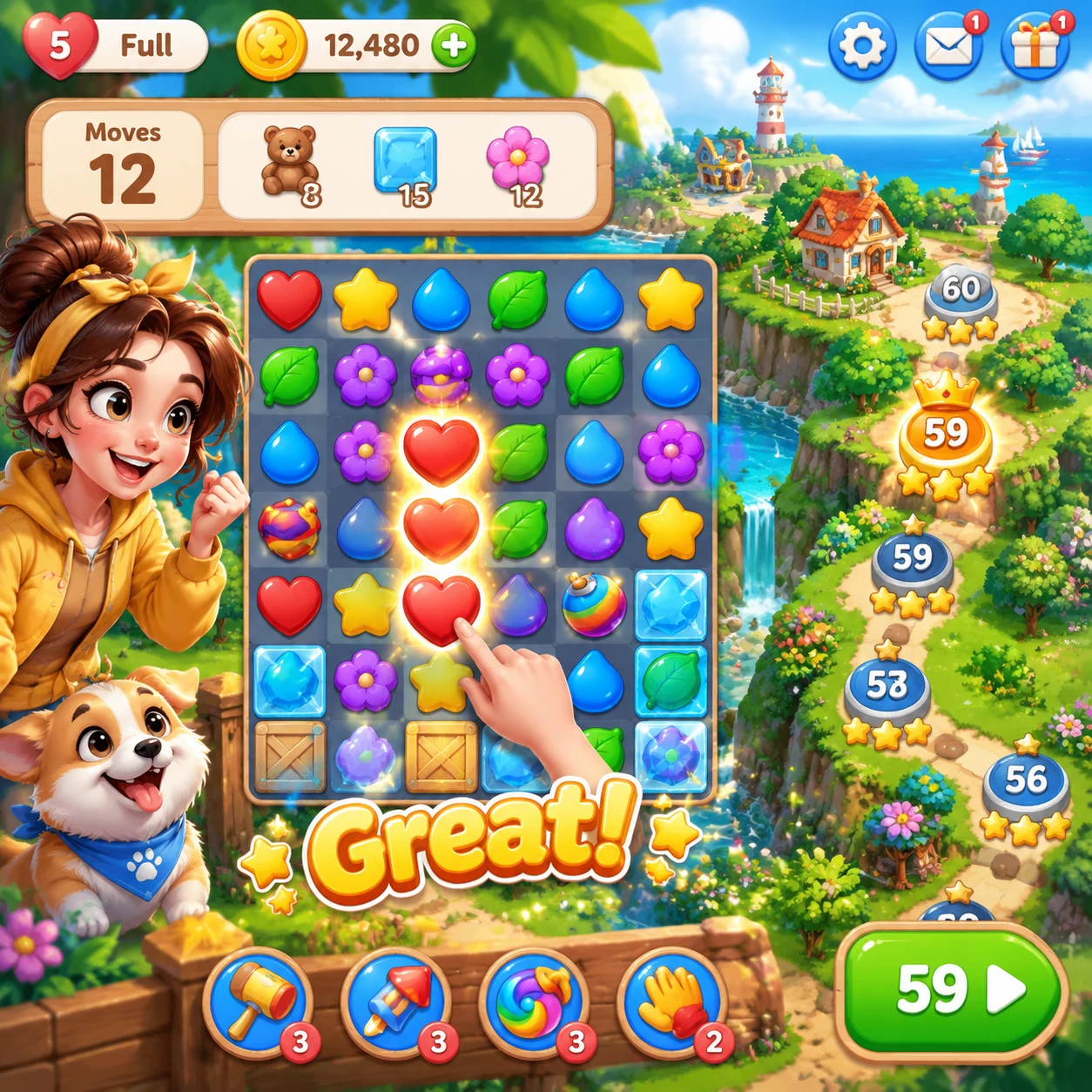
A casual game can make a five-minute break feel complete, then leave you curious about the next level. That appeal comes from deliberate game design: clear goals, satisfying actions, readable feedback, and progress that fits into everyday life.
These choices do not automatically amount to manipulation. The difference lies in how a game uses them. A well-designed game makes returning feel inviting; a pushy one can make stopping feel like a penalty.
What Makes a Game “Casual”?
Casual games are designed to be easy to understand and convenient to play, often with simple controls, short sessions, and goals players can grasp quickly. Their accessibility makes them suitable for a wide range of experience levels.
A match-three puzzle, a word game, or a quick-running game might require only a tap, swipe, or drag. The player can usually see what to do without studying a long manual. That low barrier to entry does not mean the game has no depth: later stages may ask for better timing, planning, or pattern recognition.
Short sessions are another common feature. A level might take a few minutes, making it easy to play during a break and put the game down afterward. Some casual games also save progress between sessions, so a brief interruption does not erase a long run.
Designers have to balance simplicity with variety. Controls that are too complex can make a game feel demanding, while goals that never change can grow stale. The strongest casual games teach through play, then introduce new elements at a pace that lets players learn by doing.
The Core Loop That Keeps Play Moving
A core gameplay loop is the short sequence of actions a player repeats throughout a game. In casual games, a clear loop connects an understandable goal with an action, immediate feedback, and a reason to try another round.
In a puzzle game, for example, you might inspect the board, swap two pieces, see the result, and earn progress toward the level goal. In a simple arcade game, the loop could be moving, avoiding obstacles, collecting items, and seeing a score increase. Each step should make the next one clear.
Feedback gives actions meaning. A score change, a brief animation, or a sound can confirm that a move worked. Small goals, such as clearing a row or reaching a checkpoint, break a larger challenge into manageable pieces. When feedback is clear, players can understand why they succeeded or what they might change next time.
A loop loses its appeal if actions feel repetitive without variation or consequence. Designers may add new obstacles, objectives, or board layouts to keep familiar mechanics fresh. The useful test is whether a new element changes how you play, rather than simply adding decoration or another screen to tap through.
Progression, Rewards, and the Feeling of Momentum
Progression systems show players how far they have come and what they can work toward next. Unlocks, milestones, and rewards can make individual sessions feel connected to a larger journey.
A level map is a simple example: completing one stage opens the next. Other games offer new characters, themed areas, cosmetic items, or tools. These rewards work best when they suit the game and arrive at a pace that keeps goals visible without overwhelming the player with pop-ups.
Meaningful progress can be about more than collecting items. A new level may introduce a mechanic that changes the puzzle, while a milestone can acknowledge steady improvement. Daily challenges offer another kind of goal: a small, optional task that gives returning players something specific to try. They are most player-friendly when missing a day does not wipe out substantial progress.
Not every reward needs to be a prize. A satisfying level completion, a new personal best, or access to a fresh challenge can provide a sense of momentum. If rewards become the only reason to continue, however, the underlying play may not be engaging enough. Progression should support the game, not conceal a repetitive or unrewarding core loop.
Balancing Challenge Without Frustration
A well-balanced difficulty curve introduces challenge gradually, giving players time to learn before asking them to apply a skill under pressure. Casual games aim to stay approachable while still offering a reason to improve.
Early levels often teach one mechanic at a time. Later, a game might combine familiar elements or add a tighter objective. This kind of progression helps players connect difficulty with their own growing understanding. A sudden, unexplained jump can feel unfair, especially if the game has not shown which strategy might help.
Clear failure feedback matters as much as success. If a player runs out of moves, the game should make the goal and remaining constraints easy to understand. A retry can be useful when the player sees what to change; repeated attempts with no new insight tend to feel like a chore.
Designers can also offer different ways to engage, such as optional harder levels or relaxed modes. These choices serve different preferences, though they take extra development and can make progression paths more complex. Accessibility is not the same as making every challenge effortless. It means helping players understand the challenge and decide whether they want to take it on.
Small Design Details That Make a Big Difference
Clear user interface (UI), responsive controls, and readable feedback help players understand the game and trust their actions. Small details can make a simple mechanic feel polished—or turn it into a source of friction.
A useful interface puts the goal, move count, score, or timer where players can find it at a glance. Buttons should be distinct from background decoration, and important information should not rely on color alone. These choices matter especially on a small phone screen, where clutter can make even a straightforward puzzle hard to read.
Responsive controls help actions feel intentional. A swipe should register consistently, and a tap should produce a prompt response. Sound effects and animation can make success more satisfying, but they should remain brief and adjustable. Players who prefer quiet play should be able to lower or mute audio without losing essential information.
Visual feedback also helps explain cause and effect. If a piece is blocked, a subtle cue can show why. If a special move affects nearby tiles, an animation can make its range clear. The best effects clarify the action; excessive flashes or long animations can slow play, particularly for someone repeating a familiar level.
When Engagement Becomes Pressure
Engagement becomes pressure when reminders, timers, or monetization make players feel they must return or spend to avoid losing progress. These features can be reasonable when they are optional, transparent, and easy to ignore.
Daily challenges and login rewards give players a reason to check in, but a missed day should not make the game feel ruined. A timer can add interest to a timed event; strict countdowns attached to limited attempts may instead turn a relaxing game into an obligation. Context matters: players should be able to see what expires and what happens if they skip it.
Monetization also shapes the experience. Optional cosmetic purchases or a clear ad-supported model may let players choose how to support a game. Problems arise when purchase prompts interrupt ordinary play, paid items appear necessary to pass a level, or the cost and effect of an offer are hard to understand.
Watch for a pattern, not a single feature. One reminder or timer is not proof of a bad-faith design. But if the game repeatedly interrupts play, creates avoidable waiting, or uses unclear prompts to push spending, it may be prioritizing conversion over enjoyment. A player-friendly game gives you meaningful ways to continue and to stop.
What to Look for as a Player
You can judge whether a casual game respects your time by checking whether its goals are clear, its sessions are easy to leave, and its purchases and reminders remain optional. A few minutes of observation can reveal a lot about the experience.
- Check the basics: Can you understand the objective and controls without repeatedly searching through menus?
- Notice the pacing: Does a short session feel complete, or does the game constantly interrupt you with prompts and delays?
- Read the progression: Are rewards and unlocks explained clearly, and can you make progress without checking in every day?
- Look at the challenge: When you fail, can you tell why? Does another attempt offer a useful chance to apply what you learned?
- Review the spending cues: Are prices and purchase benefits clear? Can you keep playing without buying extras?
- Try the settings: Can you mute sound, adjust notifications, or pause without losing your place?
These checks are useful for reviews, too. A game can have an enjoyable core loop and still lose points for intrusive ads or confusing controls. Separating those aspects gives a more accurate picture than calling a game simply good or bad.
Frequently Asked Questions
Casual game design combines accessible controls, short goals, and gradual challenge to make play easy to enter and satisfying to revisit. These answers cover the ideas players most often notice.
Why are casual games easy to pick up?
Casual games usually rely on familiar actions, clear instructions, and goals that fit on one screen. Many teach mechanics through early levels, so players can learn by trying instead of reading a long tutorial.
What is a core gameplay loop?
A core gameplay loop is the repeated cycle of action and feedback at the heart of a game. In a puzzle, it might mean choosing a move, seeing its effect, and working toward the level objective.
How do casual games balance challenge and accessibility?
They often introduce mechanics gradually, then combine them to create harder problems. Clear goals, useful feedback, and optional challenges help players understand the difficulty and decide how much they want to take on.
When do rewards or reminders feel too pushy?
They can feel pushy when they use repeated interruptions, make missed days costly, or suggest that spending is needed for ordinary progress. Optional rewards and easy-to-dismiss reminders are less likely to disrupt play.